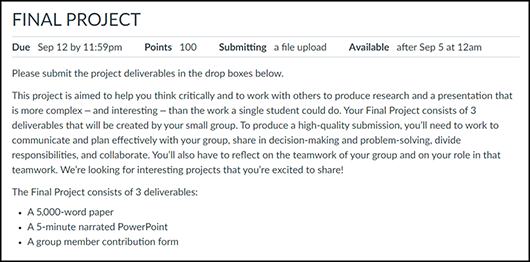
The following assignment is a group assignment in a graduate level geospatial course.
Details
This week your team will work through a structured approach to hypothesis refinement using human-centered methods, LLM-centered methods, and human-machine collaboration. By following these steps, you will critically engage with both human reasoning and AI-assisted insights to enhance your understanding of the capstone scenario.
The final project in GEOSC 107N: Rocks, Minerals, and the History of Art is a small group case study that requires students to work together to research a naturally occurring material, used in either its natural or processed form, to create works of art or architecture in history. Case studies promote critical thinking and help students to contextualize course content.
Constructivist theories assert that to develop understanding and build new knowledge, learners must be actively engaged in seeking knowledge and information, not passively taking it in (Bada, 2018). As learners encounter the world around them, they build knowledge and integrate it into their existing personal knowledge base, also known as a schema.