This is not the front page

social learning

so·cial learn·ing

/ˈsōSHəl/ /ˈlərniNG/

Noun

A learning process that suggests that learning is a cognitive process experienced in a social context. The learner is not a passive recipient of information but engages with the cognitive process, the environment, and the behaviors of others in the learning environment. Feedback is also helpful for guiding learning.

Using Small Group Case Studies to Boost Student Engagement

Image
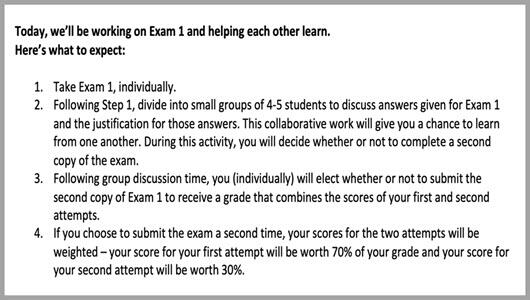
Example of a Final Project in an LMS. See text below for details
Photo Credit

Credit: © Penn State is licensed under CC BY-NC-SA 4.0

The final project in GEOSC 107N: Rocks, Minerals, and the History of Art is a small group case study that requires students to work together to research a naturally occurring material, used in either its natural or processed form, to create works of art or architecture in history. Case studies promote critical thinking and help students to contextualize course content.

Using Video-Based Asynchronous Discussions

Image
4 cartoon heads with a picture of a play button in the right corner.
Photo Credit

© Penn State is licensed under CC BY-NC-SA 4.0 

Video-based asynchronous discussions are an excellent alternative, or addition to, text-based discussions. Video-based asynchronous discussions utilize an app to create a group discussion or sharing opportunity where students record short videos of themselves and respond to their peers' posts via video. Video discussions are very effective at creating social and teaching presence and increased collaboration.

Using an Exam as a Learning Tool

Image
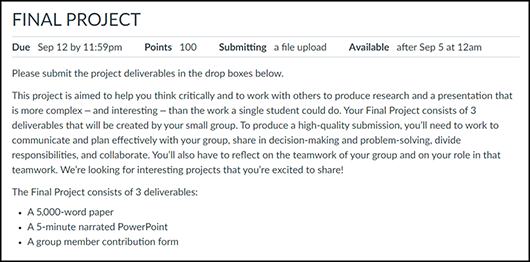
directions for using an exam for learning. Described in text
Photo Credit

Credit: © Penn State is licensed under CC BY-NC-SA 4.0 

Students first take the exam independently, and then, during the same class period and before seeing their results, they get into groups of 4 to 5, discuss the exam problems, and retake the same exam as a group. Each student chooses whether or not to complete and submit a second exam. Students have the option of simply accepting their original, independent exam score only, if they wish.

Using Student-to-Student Interactions to Boost Engagement

Engaging students in class discussions and activities is always a challenging endeavor for instructors because there is no one-size-fits-all approach that will work to draw in everyone. Students will have varying degrees of interest in the topic, and not everyone will be able to find the same degree of relevance in the concepts presented.

Building Student Engagement with Discussions

Overhead view of students sharing at a round table.

Credit: ScreenFlow, under license agreement by Jane Sutterlin

Whether for a resident course or online, cultivating a human-centered classroom community takes time and effort. Discussion forums can help. Content-delivery discussion forums help students interact when considering content-related questions and topics, but other kinds of discussions can help create an interactive community of learners who share and get to know each other outside of the realm of course content. Consider the following: