This is not the front page

formative assessment

for·ma·tive as·sess·ment

/ˈfôrmədiv/ /əˈsesmənt/

Noun

In-process evaluations to assess comprehension, learning needs, and academic progress. Formative assessments help teachers (and learners) identify deficiencies in understanding and skills and point to areas where additional practice and/or instruction is needed. These can be graded or ungraded and often include self-checks, low stakes quizzes, exit slips, polling, 1-minute reflections, etc.
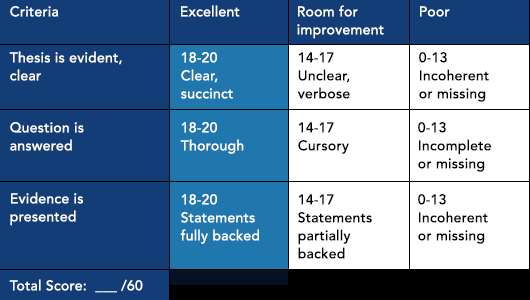

Using Rubrics to Evaluate Student Work and Build Faculty Presence

Example of Rubric Thumbnail

Credit: © Penn State is licensed under CC BY-NC-SA 4.0

Rubrics frequently supplement forms of assessment and are used to evaluate student work and learning. They can be used for projects, presentations, discussions, and writing assignments. Learners can view the criteria on which they are being assessed and can work towards meeting the stated expectations. For instance, it is common to include a rubric for online discussion forums so that learners have a clear idea of the criteria that will be used for grading (i.e.

Using Multimodal Instruction to Enhance Student Understanding

icons: music note, puzzle piece, image, camera, book, graph

Credit: © Penn State University is licensed under CC BY-NC-SA 4.0

Multimodal Instruction is just what its name suggests; it provides multiple modes of instruction, including verbal, graphic, numeric, or multimedia, to expose students to the same concept repeatedly. Multimodal instruction enhances learning in two ways: first, by allowing students to experience learning in the way they are most comfortable, and second, by challenging students to experience and learn in other ways (Picciano, 2009).

Using Infographics as an Assessment Strategy

Infographic on bringing the farm to school.

Credit: USDA Farm to School Census Infographic, Creative Commons license CC BY 2.0

The concept of presenting information in a visual format is not new. In fact, you may remember that ancient Egyptians used hieroglyphs as a visual form of communication. However, the use of information graphics (also referred to as infographics) in teaching and learning strategies still appears to be an emerging practice.